Where Can You Find Joy When Life Is Still Heavy?

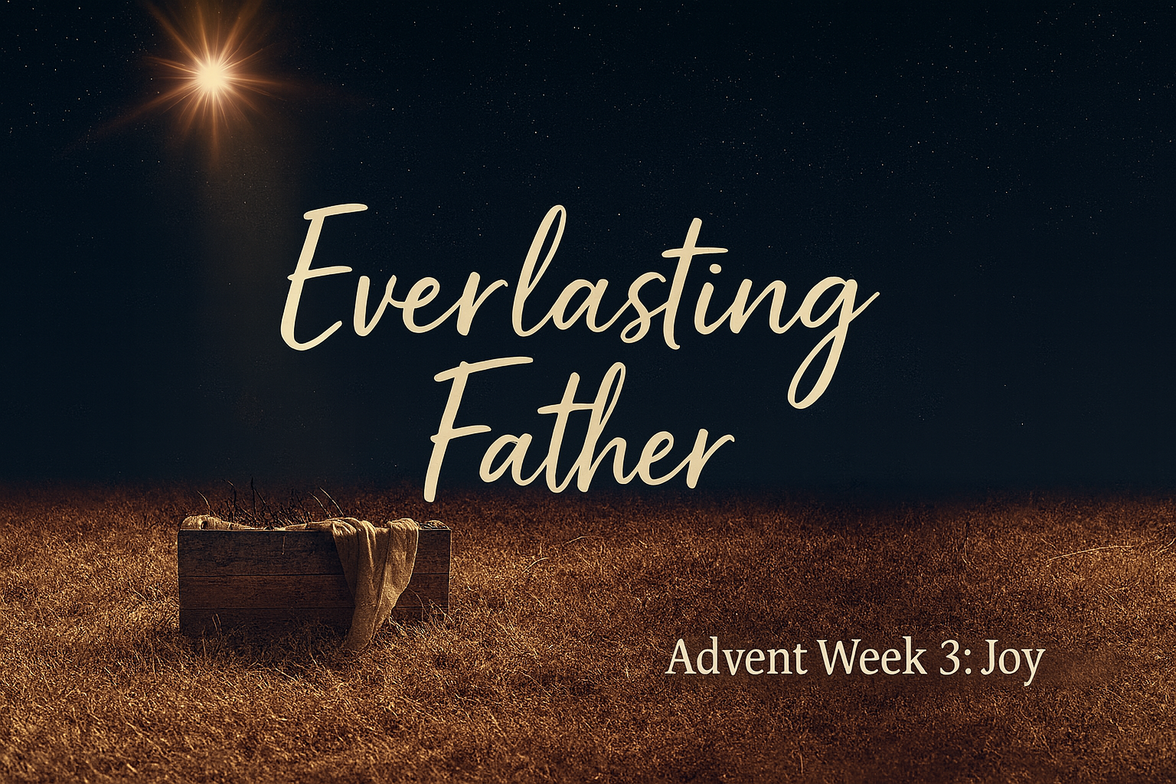
For many people, the holidays are supposed to be joyful.
The songs are upbeat.
The decorations are bright.
The message everywhere is the same: be happy, celebrate, rejoice.
But for a lot of us, that feels out of sync with reality.
Life does not slow down in December. Grief does not pause. Fear does not disappear. Loneliness does not take a break just because it is Christmas.
So here is an honest question many people are asking, even if they do not say it out loud:
How can I have joy when my life is still complicated?
Why Joy Feels So Fragile
Most of us learn to connect joy to circumstances.
We expect joy to show up when:
-
waiting finally ends
-
problems get resolved
-
fear quiets down
-
life feels more stable
But when waiting drags on, fear grows, or loss settles in, joy can slowly drain away. Not because we are doing something wrong, but because joy was never meant to survive on circumstances alone.
The Bible is surprisingly honest about this. It tells stories of people who trusted God deeply and still struggled with waiting, fear, and loneliness. Their faith did not disappear, but their joy often grew thin.
That honesty matters, especially during the holidays.
A Different Kind of Joy
In the Old Testament book of Isaiah, written during a dark and uncertain time, God makes a promise. He says a Child is coming, one who will change how people experience life, not just someday, but even now.
Isaiah gives this Child a name: Everlasting Father.
That may sound strange at first, but the idea is simple and deeply human.
A good father does not make life painless.
He makes sure his children are not alone.
The promise of the Everlasting Father is not that life will suddenly be easy, but that presence will never be absent.
This is where a different kind of joy begins.
Not loud joy.
Not forced cheer.
But steady joy, the kind that comes from knowing someone stronger is with you.
Joy That Grows From Presence
When the Bible talks about joy, it does not describe constant happiness. It describes relief, assurance, and the ability to breathe again.
Joy grows when:
-
you realize you are not alone in your waiting
-
fear no longer gets the final word
-
the future feels held, even when it is unclear
In the Christmas story itself, people are afraid before they are joyful. Shepherds are terrified. Travelers are uncertain. A young mother faces a future she does not fully understand.
Joy comes after they encounter Jesus, not because every question is answered, but because they are no longer alone.
That same promise still stands.
What This Means for You
If this season feels heavy, you do not need to pretend it is not.
You do not need to manufacture joy or force yourself to feel cheerful.
But you are invited to consider this:
What if joy does not come from fixing everything, but from not carrying everything alone?
The Christian message of Christmas is that God did not stay distant. He came close. He entered our world. And He did not leave.
The Everlasting Father is not a seasonal comfort.
He is a steady presence for waiting days, fearful nights, and lonely moments.
Joy does not erase struggle.
But it can grow quietly in the middle of it.
And sometimes, that is exactly what we need most.

About
-
Hilltop Chapel
-
Family Life Center